Discovering the A.W.E. Method for Mindfulness
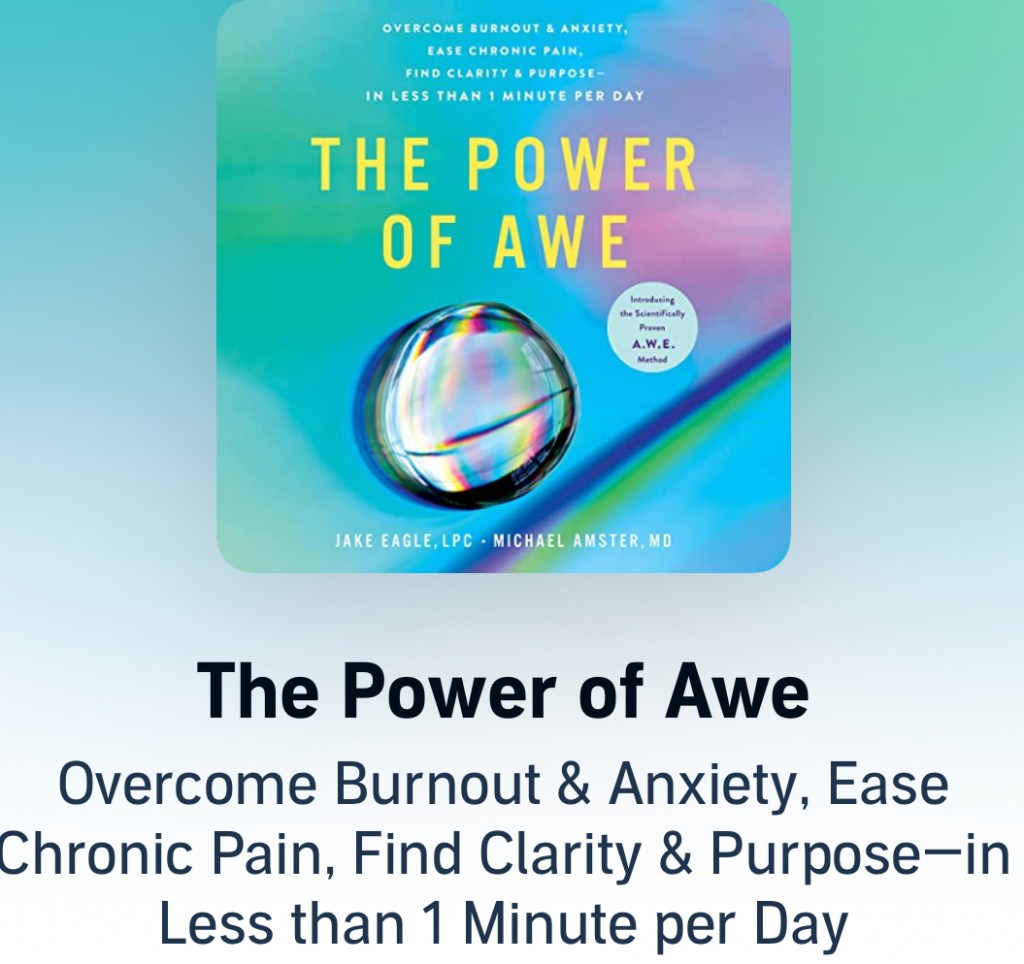
I started working on a daily practice of meditation about 10 years ago. It’s still a challenge. As anyone who has tried meditating knows, your mind can be like a restless, caged animal, always pacing around. In moments of physical stillness, your brain is likely to be continuing to aimlessly work. You find yourself scanning for a purpose, making plans, considering threats or possible rewards, pointlessly reviewing or exploring ideas. Enter “The Power of Awe,” a groundbreaking book by Jake Eagle and Dr. Michael Amster.
The Power of Awe joins other “The Power of… ” books and is most likely available where ever you get your books: Your local library or Amazon.
A.W.E. Overview
The Acronym stands for Attention, Wait, Exhale, and Expand. The authors claim on the cover that you can, “Overcome Burnout and Anxiety, Ease Chronic Pain, Find Clarity and Purpose in Less than 1 Minute per day. Is this the case? Through 3 months of practicing A.W.E., I have found success and challenges in my effort to make use of the Eagle and Amster’s ideas.
How to do It.
Its simplicity makes it adoptable for an interested person with any level of mindfulness experience with a few flexible seconds a day.
1: Attention: Give your full attention to whatever you are experiencing at the moment. You can be at your desk, on a bus, waiting in line…etc. Be fully present. You might remind yourself to gather information from all of your senses.
2. Wait: Pause, and allow the moment to unfold without rushing. In this brief pause you’ll find the space to connect with something greater.
3. Exhale: Take a deep, slow, conscious breath. As you exhale, release the tension and then open yourself up to wonder.
4. Expand: Finally, expand your awareness beyond the ordinary confines of your normal existence. Admire the perfection of a soap bubble or the way the food you cooked tastes, or the sound of the music you hear from a passing car.
Overall thoughts:
Is having enough time a problem for you? If so, There is good news.
As the authors note, the time needed to practice meditation is a common obstacle to progress. This method is convenient enough to be performed just about anywhere without having to present the appearance of full on meditation. You don’t need to assume the cross legged, upright position, with closed eyes, and hands resting gently on your thighs. You can be on a ski lift, or in your car, or pretty much anywhere, so your time commitment is pretty much nil.
The Science Behind the Awe:
In “The Power of Awe,” Eagle and Amster, a licensed psychologist and an M.D. respectively, provide detailed explanations of their efforts to measure results. The authors clearly explain the peer reviewed studies and methods of data collection used to make their case. And it looks like it works. They found benefits to the practice.
Reduce Inflammation: A.W.E. practice is seen through the use of objective measurement including blood tests on subjects to lower markers of inflammation.
Ease Chronic Pain: Practitioners with significant pain were involved in studies and showed significant improvement.
Fight Loneliness: Participants experienced improvement in feelings of isolation.
Increase Overall Well-Being: Daily use is simple, and people are finding success with this form of mindfulness practice.
Recommendations:
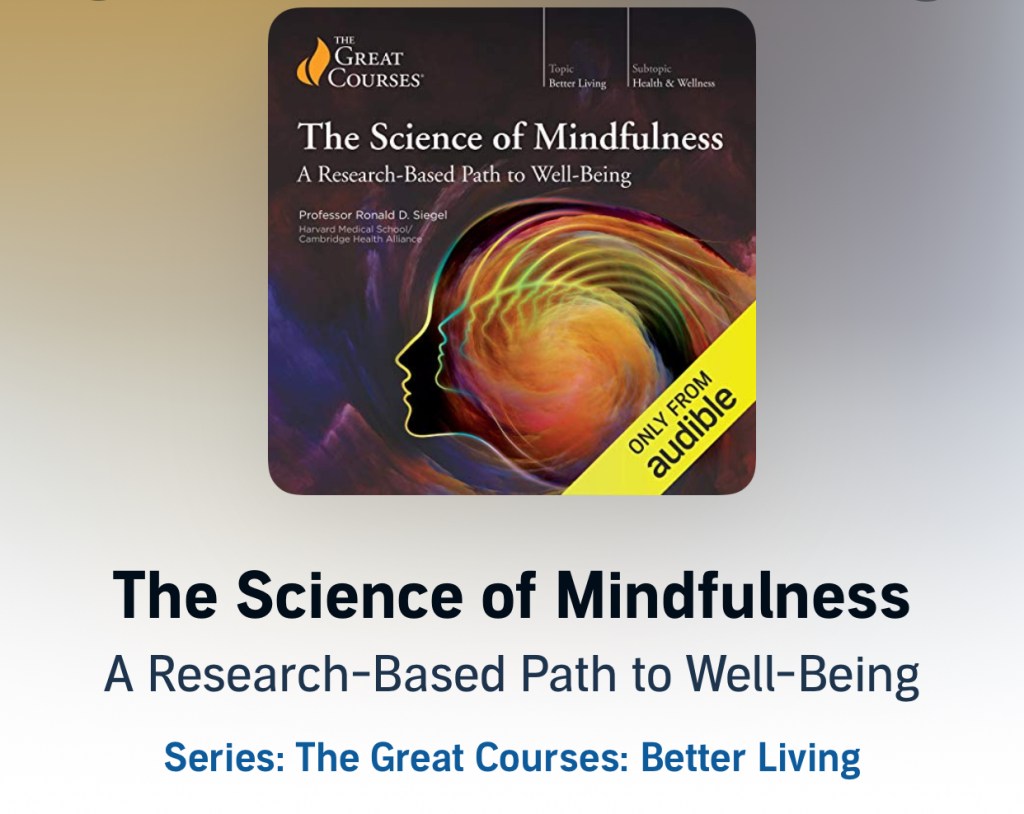
Credit: Photo of the Science of Mindfulness Cover from Audible.com
I began meditation seriously after listening to a Great Course Audiobook on mindfulness
called, The Science of Mindfulness by Ronald Siegel on Audible. And then I read 10% happier by Dan Harris.
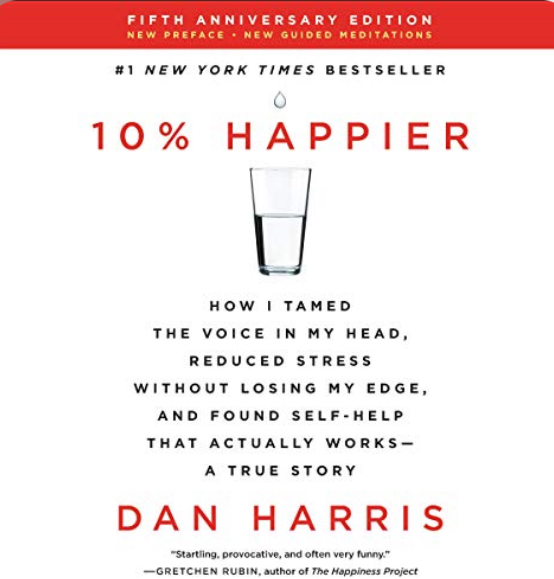
Credit: Photo of the Book cover of 10% Happier from Audible.com
Both of these are inspiring and will motivate you to try meditation. “The Power of Awe” is not as thrilling as Siegel or Harris’s offerings but is full of great ideas. It reminds you that finding a moment of deep astonishment and reflection can take place where you look for it. You might find awe as you stare into the depths of the Milky Way on a moonless night, or find it as easily in a discarded candy wrapper stuck under the armrest of your airplane seat. Awe is everywhere and can be accessed nearly instantly.
And it’s good for you! The hardest part for me is remembering to do it. My suggestion is to set a reminder on your watch or phone. So, get the book or just use the steps listed above for free. What do you have to lose? If you find it helpful, come back to Ice Swimmings for more great advice. Contact us with your ideas.
 Ice Swimming
Leave a comment